25. Shevat 5782
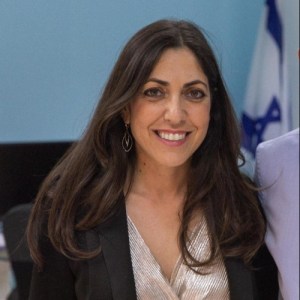
Written by Sarit Zehavi[1] – thank you for your kind agreement to publish in my „Salon“!
This week, the international media widely reported that the Jerusalem municipality evacuated a Palestinian family from their home in Sheikh Jarrah in the middle of the night as part of an ethnic cleansing that Israel is doing in Jerusalem. Even before the events of May 2021, it was already clear that anything happening in Jerusalem could trigger Arabs to take to the streets across Israel, lead to Hamas rocket fire from Gaza and Lebanon, and lead to a wide-ranging escalation.
Demonstrations were also held outside Israel demanding „FREE PALESTINE“ with the support of many students on campuses in the United States.
Unfortunately, in both cases this year and last year, the reality is very far from what was published. These are two different cases in the Sheikh Jarrah neighborhood of Jerusalem. This week’s issue is about the Salhiya family squatting since the 1990s in a plot that belongs to a neighborhood resident that has tried for years to get them out. Eventually, he reached an agreement with the Jerusalem municipality on the expropriation of the area in exchange for a handsome sum of money. The Jerusalem Municipality, for its part, planned to build a school for kids with special needs for the Arabs of East Jerusalem. The family mentioned never owned this territory and refused to vacate, apparently also due to pressure from Palestinian Authority officials. After five years, the Jerusalem municipality asked the family to set an agreed date for evacuation, and the family was forcibly evicted. The evacuation took place at night to prevent the incident from escalating into violence.
Last year’s case is even more interesting. Israel was then accused of seeking to evacuate several families inhabited by the Jordanian authorities in a neighborhood that had belonged to Jews before 1948. However, the Israeli court has never ruled that the families be evicted. On the contrary, they are defined as sitting tenants protected by Israeli law. The only requirement was that these families pay a very nominal rent since the property does not belong to them. Again, due to pressure from Palestinian political elements, these families still refuse to pay.
In Jerusalem, any conflict between neighbors becomes a political matter. It becomes a matter for people who are not only non-Israelis or Palestinians, people who have never visited Israel, and certainly not Jerusalem.
Unfortunately, as an Israeli, I have many complaints to the Israeli government about Jerusalem. If we united the city in 1967, why did we not invest in infrastructure on its eastern side? Why are the Arabs living on the east side studying the Palestinian education programs? About a decade ago, the Israeli government allocated budgets, and the Jerusalem municipality began an investment process in infrastructure. This happened in parallel with the trend among some of the Arabs in the city who began to apply for Israeli citizenship. For many years, they were entitled to it but refrained from asking for it. Today, 10% of East Jerusalem residents have a blue ID card. All the Arab residents of the city, Israeli citizens and non-Israelis, receive all the municipal services from the Jerusalem Municipality and are entitled to vote for the municipality. Unfortunately, they hardly do so.
So what’s going on here? One might call it separatism out of fear. The families in Sheikh Jarrah are afraid to reach agreements with the Israeli authorities. Many of the city’s Arabs are scared to vote in the municipal elections or ask for an Israeli ID. What are they afraid of? There are reports of threats on the lives of East Jerusalem Arabs from the Palestinian Authority and Hamas over any sign of cooperation with Israel. And this is not about security cooperation but about a fundamental recognition of the rights that the State of Israel is interested in and can give them.
But behind the scenes, bridges are being built. The Jerusalem Municipality maintains an ongoing dialogue with the local leadership in the Arab neighborhoods, which allocates new infrastructure, parks, and schools. Many of the city’s Arab residents work with Jews, and, in fact, daily life civic and business cooperation takes place in Jerusalem, despite the gaps and disagreements.
I’m sorry to say the secret bridges phenomenon is in other places as well.
When I hear about the bridges in East Jerusalem, I feel that this secret does not only happen in Jerusalem, and it is sad for me. In the Golan Heights, too, we experience the same thing with the Druze population. Both sides do not often recognize the good relations between Israel and the Israelis and the Druze in the Golan to protect their relatives living in Syria. I also feel this when I interview Arab candidates to work at the Alma Center. Although the Alma Center is not political or governmental, we are Zionist. There are Israeli flags in the office. It happened more than once that I offered the Arabs to work for me, and after a few days, they returned to me and told me that it was not really fitting.
I see these bridges behind the scenes even among my Arab friends here in the Galilee. Many of them want to integrate into the State of Israel and are willing to accept its existence. But they are afraid to say it out loud, to be exposed on social or traditional media. And we, the residents of the Galilee, certainly also the Jerusalem residents, know that many secret bridges are being built. Those in New York or Minnesota who talk about ethnic cleansing have never seen them. Unfortunately, outing these bridges will endanger their very existence.
Sending love from the western Galilee,
Sarit Zehavi
[1] Lieutenant Colonel (Res.) Sarit Zehavi is the CEO and founder of Alma – a nonprofit and an independent research and education center specialized in Israel’s security challenges on its northern border. Sarit has briefed hundreds of groups and forums, ranging from US Senators, Congressmen/women and politicians to senior journalists and visiting VIP groups in Israel and overseas. Sarit scripts numerous position papers and updates focusing on Lebanon, Syria and Israel’s national security challenges. She served for 15 years in the Israeli Defense Forces, specializing in Military Intelligence. Sarit holds an M.A. in Middle East Studies from Ben-Gurion University. (Linkedin)
 Salon Hof Ha'Carmel
Hinterlasse einen Kommentar