19. Cheshwan 5785
ב“ה
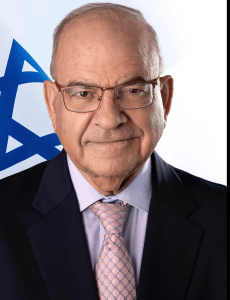
Prof. Shimon Shetreet
Following the passing of the bill in the Knesset in the preliminary reading to deny the status of UNWRA in Israel, as well as the Minister of Finance’s intention, which was announced, to cancel UNWRA’s entitlements to tax benefits due to the involvement of its employees in the massacre on October 7th, 2023, considerable legal questions arise regarding UNWRA’s status in Israel and the possibilities for taking enforcement measures against him in all areas of his activity: in education, medicine, construction and so on in the field of canceling tax exemptions. It was later announced in the media that the Ministerial Committee on Legislation approved a bill to stop the activities of UNWRA in Jerusalem.
These measures are planned following the war that broke out after the October 7th massacre carried out by Hamas, and following the revelations of the high level of involvement of UNWRA employees in the terrorist activities of Hamas in the massacre. The measures deserve to be examined in light of UNWRA’s legal status as a UN organization, which grants it immunities and benefits by law and according to international agreements.
In Israel, the status of the United Nations is determined through an agreement on the immunity of the United Nations, which was signed by the Israeli government and entered into force in 1949. This agreement is a continuation of an order and decree from the mandate period. Compared to the status of the United Nations, UNRWA’s status is more ambiguous .
From 1967, when Israel became sovereign in the West Bank and the Gaza Strip, the Michelmore-Comay agreement was signed, according to which all the immunities granted to the UN are also granted to UNRWA, being part of the UN. This agreement was signed on June 14th of that year, and referred to the West Bank and the Gaza Strip.
On June 28th, 1967, a government decision was made regarding the annexation of Jerusalem and the determination of boundaries both in terms of the area of jurisdiction according to the Order of Government and Justice, and in the matter of applicability of the municipal government according to the Municipalities Ordinance. Both laws were amended accordingly. The question arises, is the agreement regarding UNWRA from June 14th binding. In legal discussions that took place related to the activity and claims against UNWRA, the state previously submitted a confidentiality certificate regarding UNWRA’s activities. A certificate was accepted by the courts of first instance.
The courts have determined that once the state submits a certificate, it actually brings a final answer to the matter. But the courts did not address the legal issue arising as a result of the fact that the Michelmore-Comay agreement was actually modified by the decisions and legislation of June 28th, 1967. The difference was reinforced by the legislation of the Jerusalem Basic Law and its amendments.
Further to the strengthening of Jerusalem’s position in the enactment of the Basic Law: Jerusalem the Capital of Israel in 1980, which clarifies that: „The whole and united Jerusalem is the capital of Israel“, a significant amendment was added to the law in 2000. Section 6 added to the law as part of this amendment created a new prohibition on the transfer of governmental powers regarding to the territory of the Jerusalem Municipality and stated that: „it will not be transferred to a foreign, political or governmental body, or to any other foreign body“. This amendment was further strengthened in 2018 in an amendment to the law in which it was determined that the provisions of the aforementioned section 6 may not be changed except by a majority of 80 members of the Knesset.
Therefore, there is an infrastructure in terms of internal Israeli law to take the position that UNWRA has no protection after 6/28/67 and following the amendments to the Jerusalem Basic Law.
So far the things are said in relation to the internal law, therefore the bill passed in the Knesset in preliminary reading provides an answer to this , and removes sufficiency regarding the lack of immunity and the lack of recognition of UNWRA’s activities, following the organization’s involvement in terrorist activity and incitement.
However, the question arises as to whether a country that is a member of the UN and has pledged to grant the UN immunities, can qualify the immunities it grants to UN organizations. The answer to this should be that UNWRA’s violations of its obligations in upholding the laws of the country in which it operates can be a basis to cease recognition and the possibility of operation of that organization.
In the case of UNWRA, in light of the critical mass of evidence of direct involvement in terrorism, such as the participation of the organization’s employees in the massacre on October 7th, 2023, as well as the use of UNWRA institutions and facilities in the Gaza Strip for terrorist purposes, as well as incitement in the curriculum and in other ways, in UNRA institutions in the Gaza Strip and the West Bank, can be a basis for justifying the cessation of activity in Jerusalem. However, since the UN does not yet accept Israel’s position, we are expected for discussions and disputes in this matter.
Shimon Shetreet is a professor of law and a former minister
Kategorien:Israel, Shimons' lounge
 Salon Hof Ha'Carmel
Hinterlasse einen Kommentar